
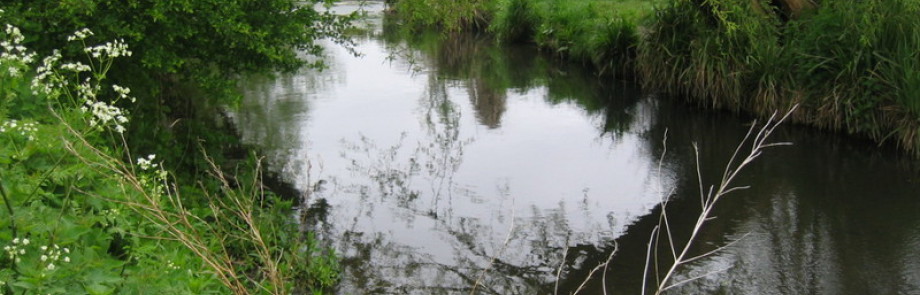
River Darent Catchment
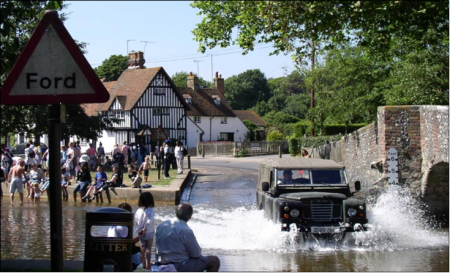 River Darent - Eynsford
The River Darent rises on the Greensands south of Westerham (part of the Kent Downs AONB) in Kent to the confluence with the River Thames on the Dartford and Crayford Marshes. The river covers a
length of 21 miles (34km) from source to the Thames.
The River Darent is a significant chalk river, it is fed by two small tributaries the Honeypot and Watercress along the upper section as well as its one main tributary the River Cray which joins the
Darent at the boundary of the marshes.
The Darent receives important baseflow from groundwater within the underlying West Kent Darent and Cray chalk groundwater body. This groundwater body underlies the whole of the Darent and Cray
surface water catchment. The chalk groundwater is also heavily relied upon for drinking water supply and industrial abstraction.
Although predominantly rural, bordered by agricultural grassland and arable farmland it travels through a ribbon of small villages which sit along its course and two large urban areas, Sevenoaks and
Dartford.
Along the full length of the river Darent the history of human activity is clear, the river travels through a series of on-line lakes which are former quarry pits and many structures and altered
channels exist from the legacy of mills. The river travels through the grounds of Lullingstone Castle and past the Roman Villa site at Eynsford.
The river is popular for fishing with a number of fishing lakes and fly-fishing clubs and with walkers who can take advantage of the Darent Valley Path.
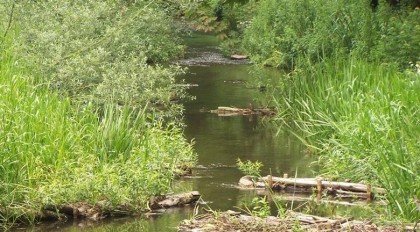 River Darent - Lullingstone
Vision for the Darent
By 2027 we believe we can achieve Good Ecological Status/Potential in all water bodies in the Darent. This will mean a cleaner, more natural river which is less impacted by abstraction
particularly in dry years.
In order to meet the needs of all who enjoy the river, we aim to achieve a mosaic of river habitats. Where possible we aim to see a natural river structure; incorporating meanders, pools and riffles
to ensure that flow sensitive ecology can flourish. At the same time we aim to achieve a sustainable level of abstraction which meets the needs of society but maintains river flows in dry summers. We
aim to sustain the coarse fish habitat enjoyed by anglers in the mid Darent.
We recognise there are some issues where fuller discussion is required. For example balancing the impacts that impoundments have on fish migration whilst augmenting the aesthetic value and
recreational benefits of the lakes created; establishing the right balance between weed clearance to manage flood risks whilst allowing river banks to provide a diverse habitat for valued species
such as water vole.
Diffuse pollution poses the most long term risk to the rivers. Groundwater contamination will take a long time to improve but remedial activity will see a steady improvement in the quality of the
water table.


Get involved!
Find out how by contacting us at:
North West Kent Countryside Partnership
Hall Place
Bourne Road
Bexley DA5 1PQ
Tel: 01322 621 239
E-mail:
nwkcp01@kent.gov.uk
or
sara.spellman@kent.gov.uk

Explore Kent
For further volunteering opportunities, please click on the link below:
 Print
Print 